
01 / Summary · Cybersecurity · design sprint
Threat Assessment & Monitoring
A focused design-sprint contribution translating cybersecurity consulting expertise into an evidence-led monitoring experience.
Context
Indexnine
My role
Design sprint contributor
Delivery boundary
Sprint concepts · no claim of platform ownership
02
Problem statement
An enterprise cybersecurity consulting firm was translating advisory expertise into a product for continuous assessment and monitoring. Raw threat information needed to become understandable, prioritised and actionable.
03
Role and team
My contribution was limited to the design sprint. I helped shape the assessment-to-action experience and its supporting journey. I did not own the full product, lead its engineering team or claim production delivery.
04
Approach
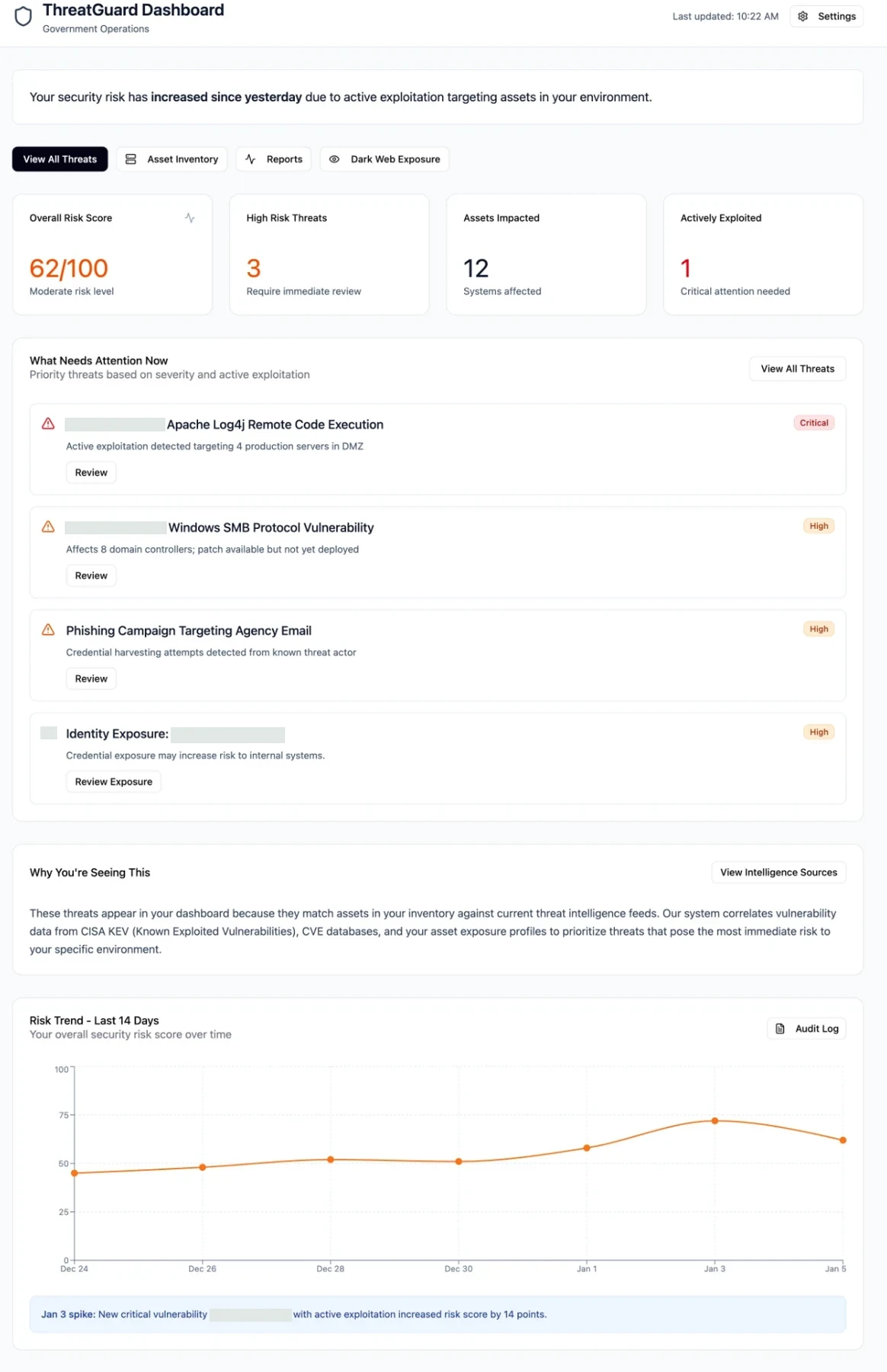
The sprint connected an overview of risk with threat context, affected assets, supporting evidence and remediation. The design makes the reason for a recommendation visible before asking a user to act, keeping human judgement around high-impact security decisions.
05
Challenges
Security interfaces can bury judgement under severity scores. The sprint had to show why something needs attention — not simply assign it a number — while keeping high-impact decisions in human hands.
06
Solution
The experience connects risk to evidence to action: a composite risk view, threat analysis with affected assets and supporting evidence, and consultant-grade remediation steps.
07 / Design & delivery evidence
From intent to tangible work.
08 / Results and impact
Assess
Prioritise threats and affected assets
Explain
Show evidence and risk context
Act
Make remediation actionable
What I take forward
Security interfaces need to explain why something needs attention, not simply assign it a severity. The screens are sprint design evidence; their sample risk scores and asset counts are not measured business outcomes.
The next chapter
Let’s build what comes next.
Design vision. Strong teams. Products that earn trust.