
01 / Summary · Logistics · operational UX
Driver-Led Logistics
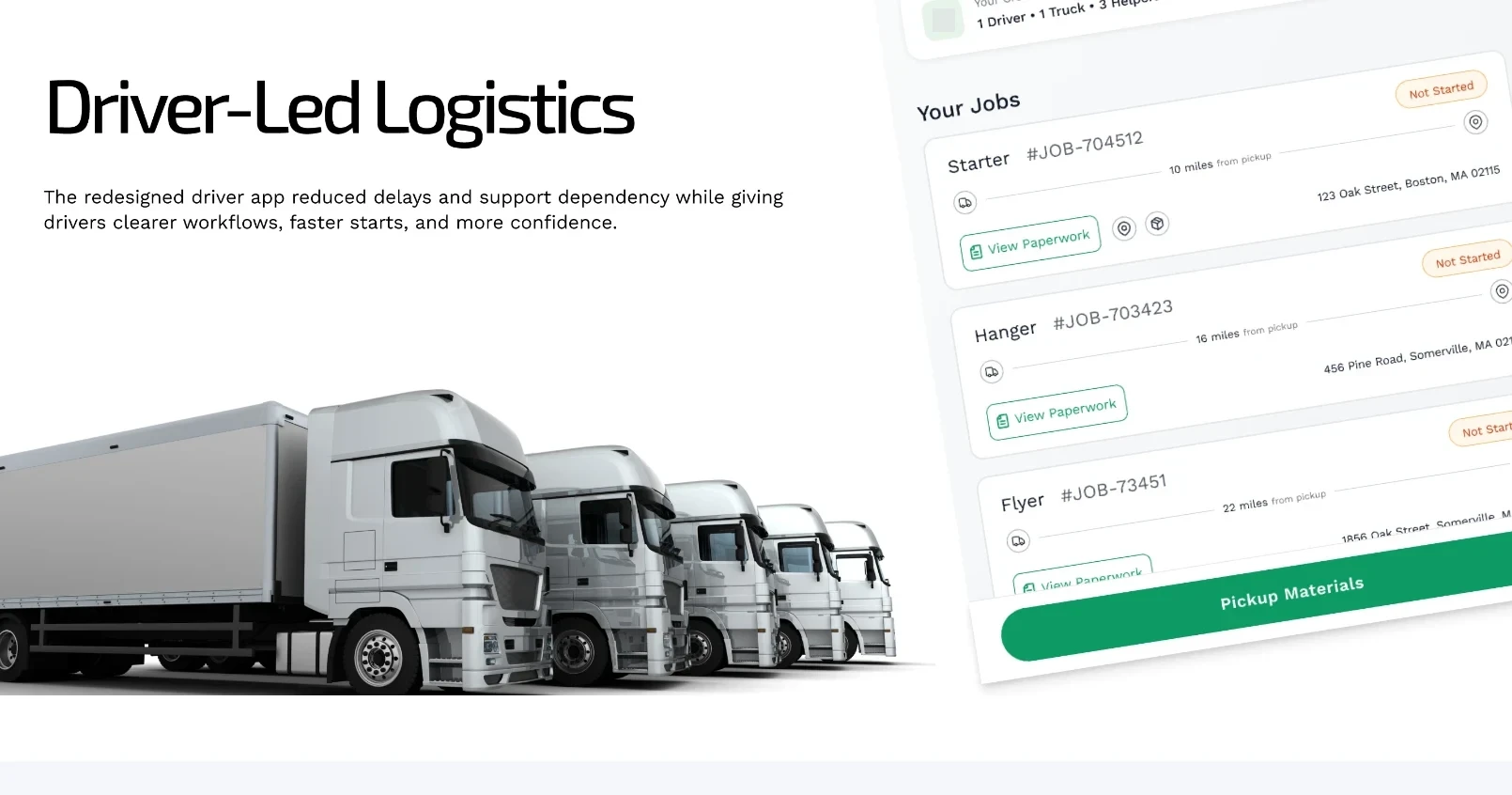
A driver-first operational experience that brings readiness, job information and the next action into one clear workflow.
Context
Driver operations case study
My role
UX/UI · app modernisation · UI refresh
Delivery boundary
Redesign concept and workflow evidence
02
Problem statement
A fragmented tablet-based driver experience created delays, interruptions and dependence on the office. Drivers needed to complete mandated steps outdoors, under time pressure and sometimes wearing gloves.
03
Role and team
The case-study evidence centres on workflow analysis and interface modernisation. Role, team size and deployment outcomes beyond that evidence are not asserted.
04
Approach
The approach mapped the driver workflow, reviewed operational information and audited cognitive load. AI was used to help validate insights, not replace operational understanding.
05
Challenges
Operational clarity is not a cosmetic refresh. Larger tap targets and stronger hierarchy only matter when paired with the real sequence of readiness checks, job selection and execution.
06
Solution
The redesign introduces a pre-job readiness layer, surfaces crew and material information early, organises paperwork and prioritises the next action — with larger operational tap targets for field use.
07 / Design & delivery evidence
From intent to tangible work.
08 / Results and impact
Ready
Pre-job checks before execution
Focused
Job, crew and material details upfront
Accessible
Larger operational tap targets
What I take forward
Operational clarity is not a cosmetic refresh. Larger tap targets and stronger hierarchy matter when paired with the real sequence of readiness checks, job selection and execution. Production impact needs validation with drivers.
The next chapter
Let’s build what comes next.
Design vision. Strong teams. Products that earn trust.